Learning Beyond the Classroom: The Power of Social Justice Service Trips
Some of the most transformative learning does not happen sitting at a desk. It happens when teens step outside of their comfort zones, into unfamiliar places, cultures, and realities—and discover not only the world, but themselves. Social justice service trips offer a powerful alternative to traditional classroom learning by immersing students in real-life experiences that bring Jewish values, empathy, responsibility, and leadership to life.
Judaism teaches us that learning is not meant to remain theoretical. Na’aseh v’nishma—we will do and then we will understand—reminds us that action itself is a form of sacred study. Service trips embody this idea by allowing teens to live Jewish values rather than simply talk about them. Through hands-on work, meaningful relationships, and reflection, students internalize concepts such as chesed (kindness), tzedek (justice), tikkun olam (repairing the world), and kavod habri’ot (honoring human dignity).
Going abroad adds an essential layer of cultural learning and social interaction. Teens learn how communities function differently than their own, how history, geography, and economics shape daily life, and how privilege and access vary dramatically across the world. They learn to communicate across language barriers, collaborate with peers and community members, and adapt to new norms and expectations. These experiences foster humility, gratitude, and a deeper sense of global Jewish responsibility.
An important—and often overlooked—part of this learning is discomfort. Experiential education thrives in moments that feel unfamiliar or challenging. Feeling uncomfortable is not a failure; it is a catalyst for growth. Whether it’s navigating limited resources, physical labor, cultural differences, or emotional encounters, these moments push teens to reflect, ask questions, and develop resilience. In Jewish tradition, growth often emerges from struggle, and these trips provide safe, supported spaces for teens to wrestle with complexity and uncertainty.
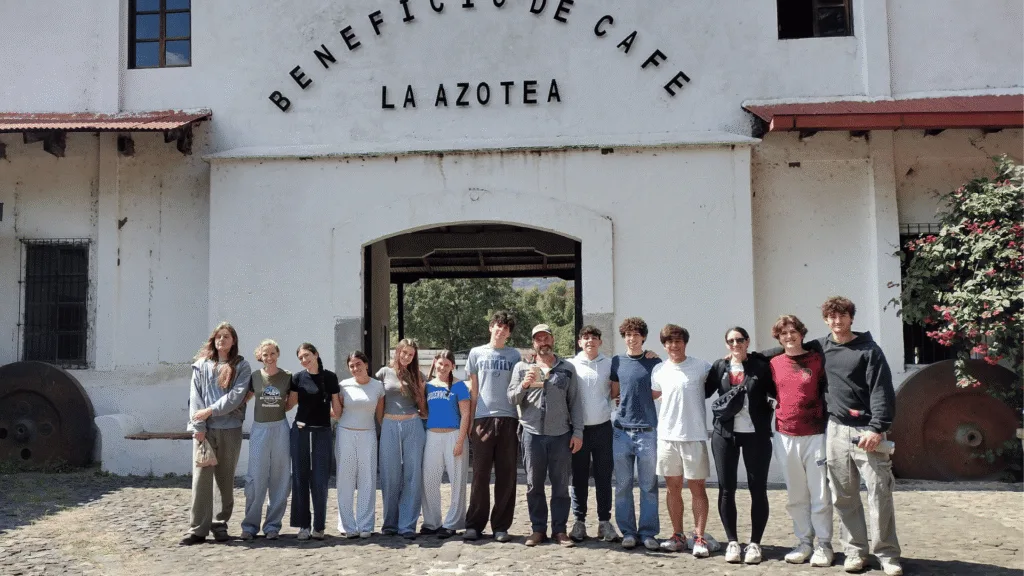
Our recent service-learning trip to Guatemala with our 11th graders exemplified this kind of transformative learning. One of the most impactful experiences was working to build a stove for Don Wen, a man who lives in a very humble home with very few material possessions. Despite his circumstances, Don Wen welcomed us with extraordinary warmth. His graciousness, kindness, and everlasting smile left a deep impression on our students. His gratitude—expressed not through words alone, but through presence and spirit—challenged our teens to rethink what it truly means to be rich.
Another powerful project involved building a compost toilet on the side of a steep hill—along a narrow path used daily by field workers traveling between their homes and their work. These workers spend long hours under the scorching sun planting beans, corn, and root vegetables that sustain their families and communities. Standing in that space, our teens gained a visceral understanding of labor, dignity, and the invisible systems that support daily life. This was avodah—sacred work—in its truest sense.
We also spent time at Mrs. Lesby’s farm, a haven for over 45 children who come there after school. It is a place of safety, nourishment, and joy. There, our students helped build a pizza oven out of cob—mud, straw, and water—using ancient, sustainable techniques. What might seem like a simple structure became a symbol of community, creativity, and care. The laughter, teamwork, and shared purpose in that space reflected the very essence of kehillah (community).
These experiences cannot be replicated within four classroom walls. They live in the muscles, the heart, and the memory. They shape how teens see the world and their place within it. Social justice service trips teach our students not only how to help, but how to listen, how to learn, and how to lead with compassion. They return home changed—more grounded in their Jewish values, more connected to one another, and more committed to building a more just and caring world.
This is learning that lasts a lifetime.
Tamara Donnenfeld