Temple Beth Am

Kidz Mealz School Lunches Login    |    RenWeb - For Parent Login
  • Home
  • About
  • Admissions
  • Academics
  • Alumni
  • Visit Temple Beth Am Site
  • Toddler Time
  • Early Childhood
  • Elementary School
  • Judaic Studies
  • Admissions
  • The Living Room
  • PATIO / Parent Involvement
  • Summer Camp
  • After School Programs
  • Chai Lights / News
  • Day School Videos
  • Photo Gallery
  • School Calendar
  • Day School Forms
  • Kidz Mealz School Lunches
  • RenWeb — For Parents
  • FACTS Tuition Payments

It's Happening at Beth Am...

Day School Closed

Monday, May 27, 2013

EC Last Day of School

Tuesday, June 4, 2013

ES Last Day of School

Thursday, June 6, 2013

5th Grade Graduation

Friday, June 7, 2013

10:00 am - 1:00 pm

Elementary School


    Philosophy

The focus in the Elementary School (Grades K-5) is on learning through self-discovery, inquiry and cooperative experiences. An integrated curriculum allows students to learn general and Judaic studies concurrently. By combining subject areas, we create opportunities for greater breadth and depth of perspective. Our students strive for and attain high levels of achievement, independent thinking and ethical behavior.


We are committed to being responsive to differences in learning styles and developmental needs and providing a challenging curriculum with flexibility to meet the individual needs of each student. The focus is on academics, and on developing the resiliency, confidence and integrity that will lead to a life-long love of learning. Temple Beth Am Day School graduates are well prepared with the basic skills and tools that they need for success in middle school. Day School graduates continue their education at Miami's top independent schools, public schools, gifted and magnet programs.


    School Goals

• Engage students in active and meaningful learning.
• Provide opportunities for inquiry and self-discovery.
• Encourage independent and critical thinking.
• Promote self-efficacy and self esteem as part of the responsibility for learning.
• Prepare students for real-life problem solving.
• Integrate general and Judaic studies to create opportunities for greater breadth and depth of perspective while supporting the school mission.


Elementary School Curriculum

The curriculum overview is intended to provide a representation of the content of the curriculum at Temple Beth Am Day School in the disciplines of language arts, mathematics, social studies, science, Hebrew and Judaic studies. In addition, Temple Beth Am Day School offers distinctive programs in art, music, computer technology and physical education.

   Kindergarten

Language Arts: The language arts program provides opportunities and resources for students to engage in meaningful literacy experiences with a strong emphasis on phonemic awareness. A balance is maintained between explicit teaching and informal incidental learning, while at the same time differentiating to accommodate individual needs and learning styles. Teachers scaffold literacy experiences in the core curriculum components of listening, speaking, reading and writing. Students observe as teachers model. They engage in collaborative literacy experiences, followed by a variety of opportunities for guided independent practice. The Reading and Writing Workshop is launched in kindergarten and students begin to recognize that pictures and words hold stories. The process of writing helps children understand written language as they gain control of letters and texts. They become composers of meaning and begin to tell their own stories as they move along the learning pathway. Handwriting is taught through the Handwriting Without Tears program, a multi-sensory, developmental approach that facilitates individual student success.

Mathematics: The mathematics program provides opportunities for students to learn important mathematical concepts and procedures, and in turn become flexible and resourceful problem solvers.Through our Everyday Math program, kindergarten students are helped to make sense of their world as they build connections between mathematics and other learning domains. Time for play with a variety of manipulatives that invite mathematical thinking is essential in developing children's mathematical ideas and skills. This allows for in-depth involvement with mathematical ideas that will build understanding over time. Number and operations is the key topic in kindergarten mathematics. Students develop competency in counting, comparing and ordering, patterning and graphing, adding and subtracting. Geometry and spatial reasoning help students understand the spatial composition of their world. Students learn to measure with meaning through experiences that emphasize real-life problem solving and thinking. Making connections between math concepts helps strengthen their understanding that mathematics is a coherent system.

Social Studies: The primary goal of social studies in kindergarten is to foster a child's awareness of self in the social setting. As young children understand the larger world through their understanding of themselves and their experiences, the content of the social studies program focuses on self and the relationship to family, school and the community. The content lends itself to a theme-based approach that naturally includes multiple learning domains and offers many opportunities for investigation. A significant amount of social studies content is very much a part of the ongoing everyday activities in the kindergarten classroom. Through classroom community building teachers help students strengthen their abilities to participate in group decision making, establish rules and consequences, express opinions and be respectful of others. Judaic connections are integrated into the curriculum, connect to our mission and add to the richness of the kindergarten experience.

Science: The science program provides kindergarten students with opportunities for guided hands-on learning and observation of the natural world around them. Experiments connected to the physical nature of the environment nurture curiosity and wonder and increase the desire to know the "how" and "why" of things. Science is a time to notice, wonder and explore. The big ideas of the kindergarten science curriculum include searching for and recognizing patterns, identifying cause and effect and observing how form relates to function. Investigation centers on the properties of objects and materials, weather, the five senses, nutrition and the seasons.


   Grades 1–5

Language Arts: The language arts program provides many opportunities for students to read, write, listen and speak, in order to engender an understanding of and appreciation for the printed word. Teachers use an integrated approach intended to foster the development of reading and writing and provide a teaching/learning experience in which students use language in familiar and meaningful contexts. The focus begins with learning to read and transitions to reading to learn while enhancing vocabulary development and higher order reasoning skills. Immersion in authentic literature is a prerequisite to inspiring good writers, as the writing process connects reading to the author's craft. Students journey through a writing curriculum spiral that allows them to experience writing for varied purposes and audiences. Through this process they understand and thereby employ the mechanics of language including grammar, punctuation and spelling. These strands of language arts comprise the cornerstone of learning and provide students with the skills necessary to pursue their life goals and participate fully as informed, productive members of society.

Mathematics: The need to understand and be able to use mathematics in everyday life and in the workplace is critical in our changing world. The mathematics program, guided by the Principles and Standards for School Mathematics of NCTM (National Council of Teachers of Mathematics) emphasizes teaching that fosters and builds on students’ mathematical understanding and thinking. Teachers create opportunities for students to learn new mathematical concepts and develop strategies to strengthen and extend them within a spiraling curriculum well articulated across grade levels. Mathematics in the primary grades is rich in mathematical language and thought provoking hands-on opportunities. Intermediate students learn to make sense of mathematical ideas as they acquire the skills and insights necessary to solve problems. Instruction at this level focuses on maintaining student engagement and enthusiasm. The use of manipulatives throughout the grade levels serves to enrich and deepen understanding as students utilize their senses in the learning process. The mathematics program is grounded in the belief that skills are most effectively acquired when understanding is the foundation for learning.

Social Studies: The content of the social studies curriculum is structured around ideas, concepts and problem solving in order to promote social understanding and civic responsibility. The goal of the social studies program is to provide students with opportunities to develop the skills and understandings necessary to actively participate in a global society within the thematic framework defined by the
National Council for the Social Studies (NCSS). Learning experiences are designed to help students integrate an understanding of themselves and the world, and engage in the investigation of problems and issues faced by the communities in which they live. Geographic literacy is an integral part of the social studies program. This facilitates the development of a deeper understanding of people and places thereby nurturing social intelligence. The Judaic curriculum is integrated with social studies through the grade levels, connecting to Israel, Jewish values, Jewish community and Jewish American history. Students have a variety of exciting opportunities to interact with content in experiences such as the 2nd grade "Trip" to Israel, the 4th grade Americana Museum and 5th grade Immigration Day.

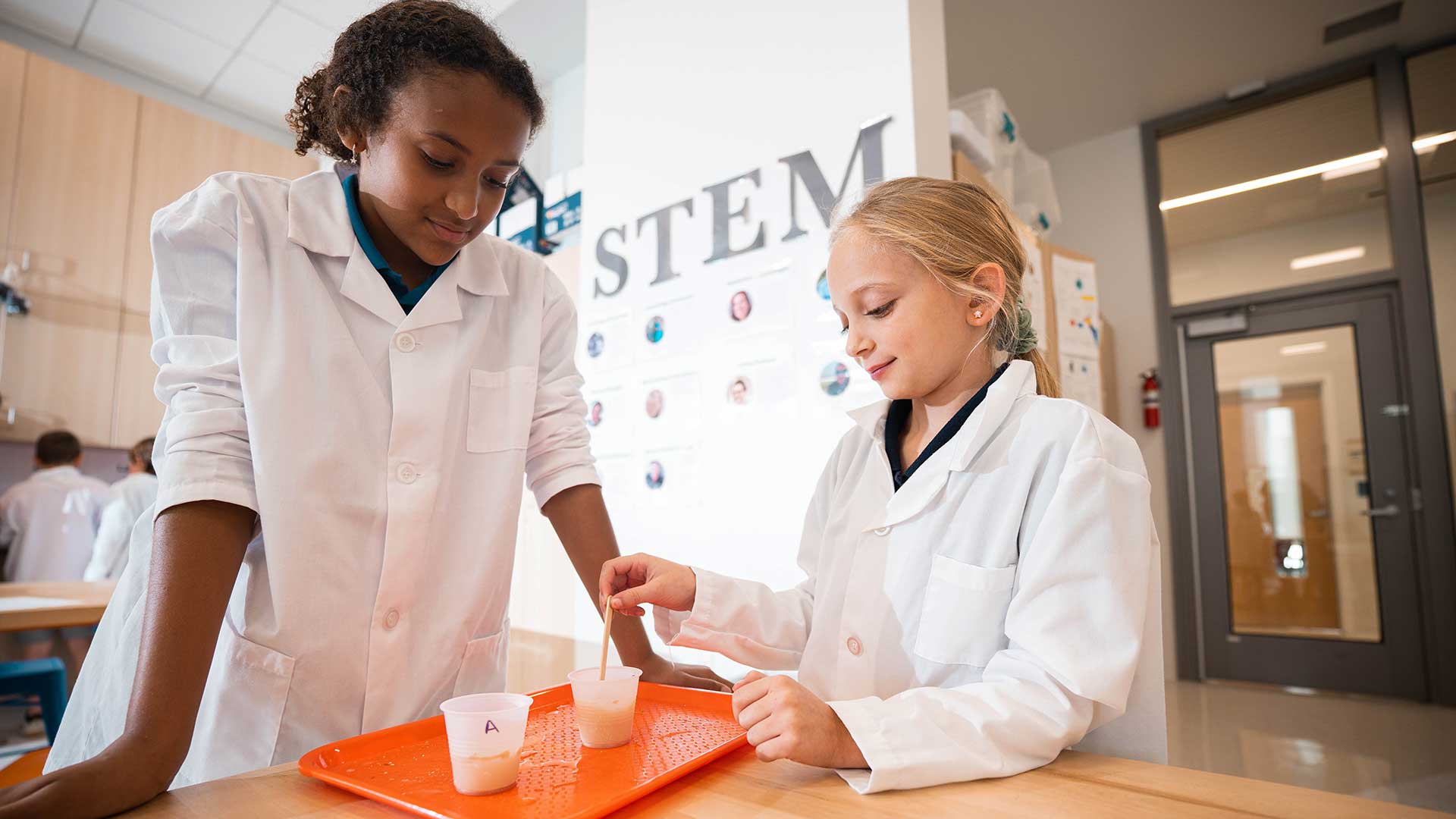
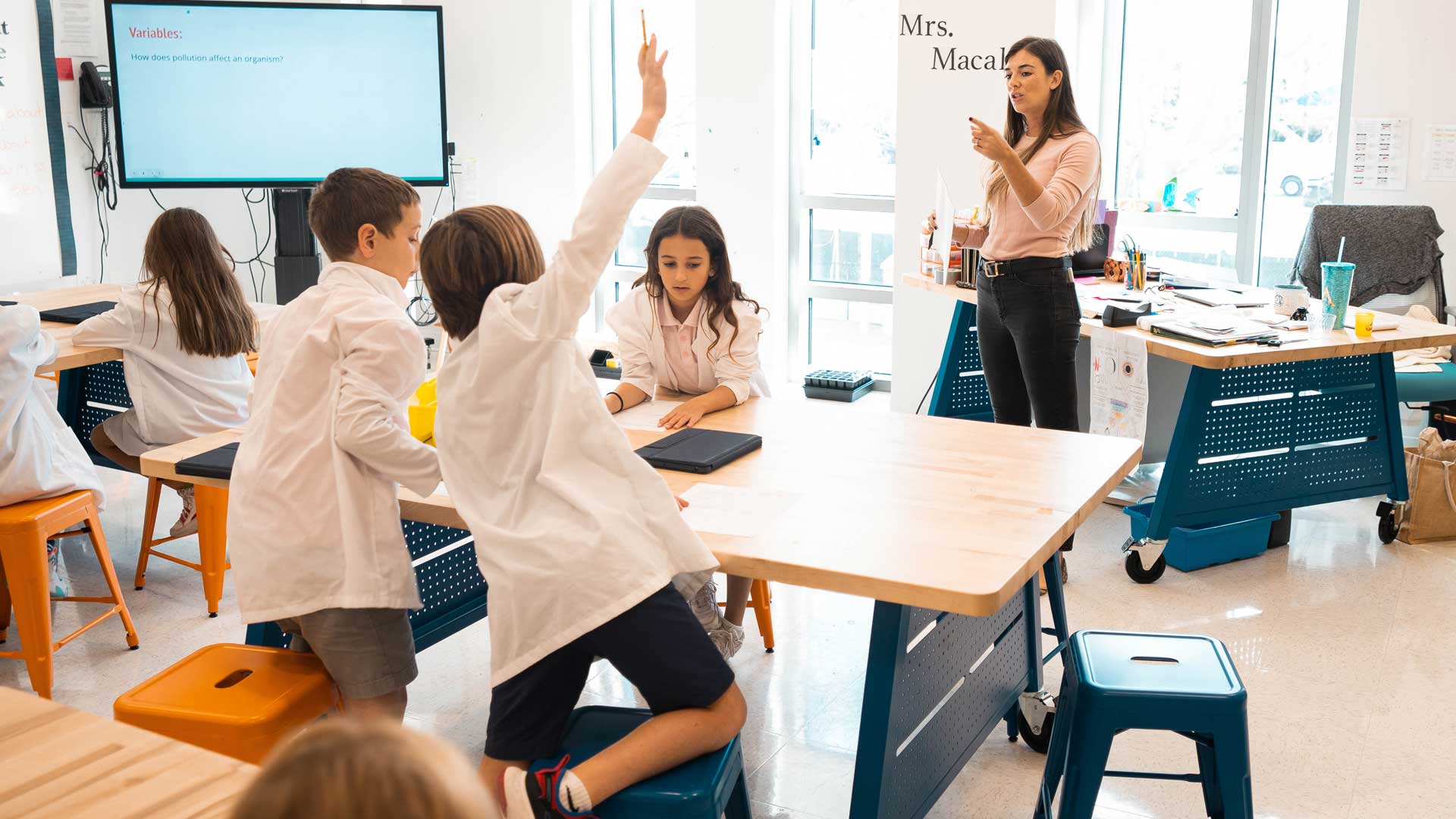
Science: The science program provides students with the opportunity to investigate the natural world, learn about interesting, relevant and exciting science ideas and link science to other areas of the curriculum including mathematics, writing, literature and technology. Students learn to use the scientific method as they conduct experiments, make observations, form hypotheses and draw conclusions. Science specialists capitalize on children's innate curiosity to infuse their lives with meaningful structured and unstructured science experiences inside and outside the classroom. The goal of the science program is to promote a broad development of science concepts and skills that facilitates the connection of science to students' lives. It is grounded in the belief that science is a particular way of wondering about, looking at and knowing the world. In grade five the science program includes the incorporation of FOSS:  Full Option Science System, a modular system of experiments and activities based on a collaborative, hands-on approach. Collaboration is central to the enterprise of science and facilitates discovery and learning through observation and sharing of ideas. The curriculum spirals as students engage in inquiry and exploration and culminates with a fifth grade science project where students apply the sciencitic method they have just learned.

Art: With a firm foundation of basic art skills, the art program allows students to grow creatively. Studio skills incorporate self-direction and originality in visual expression and include experimentation with mixing of colors, exploration of fiber and textile techniques, printmaking, ceramics and creation of multi-dimensional works of art using mixed media. These skills expand with each grade level and keep in tune with current art trends. The program is rich and innovative combining important elements of aesthetic and critical inquiry with skill instruction. Art is integrated into every subject across the curriculum and students gain the confidence and expertise to explore a variety of artistic options.

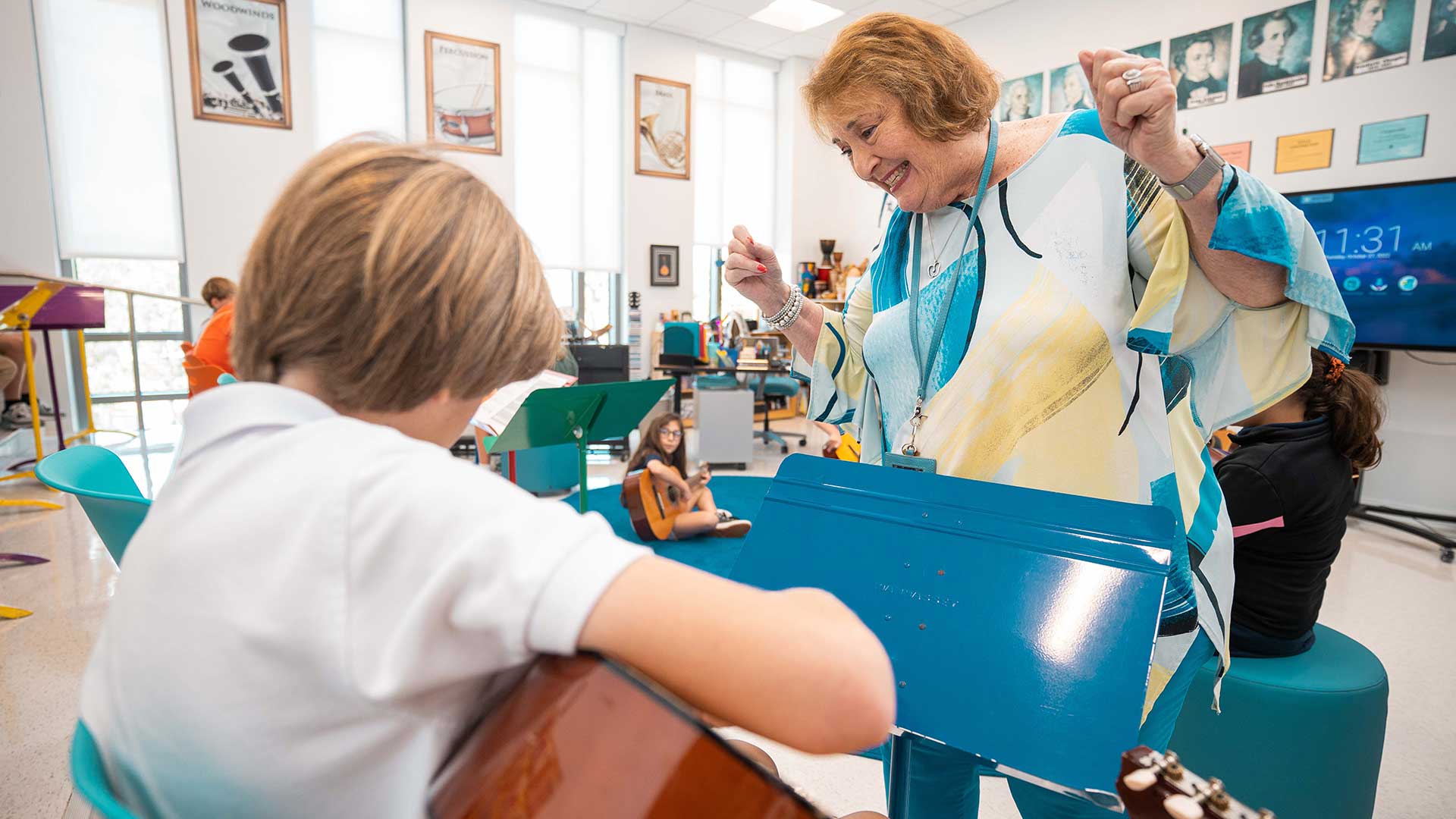
Music:  The music program provides students at each grade level with opportunities to become comfortable singing individually and in small groups, as well as learning the techniques of singing in a large group. It is a well defined and carefully constructed program that offers students a musical mélange. Students engage in music-making of all kinds including instruction in rhythm sticks, piano, recorder and guitar. Exploration of the elements and types of music and the world of American and classical musicians and composers affords students a multi-dimensional musical experience. Music enriches the content areas, and plays an important role in school wide assemblies as well as individual grade level programs such as the third grade Shabbat dinners,
fourth grade Israel Independence program, fifth grade Immigration Day and all holiday celebration days. Music is an integral part of the Hebrew program enriching holiday observances and leadership services.


   Physical Education


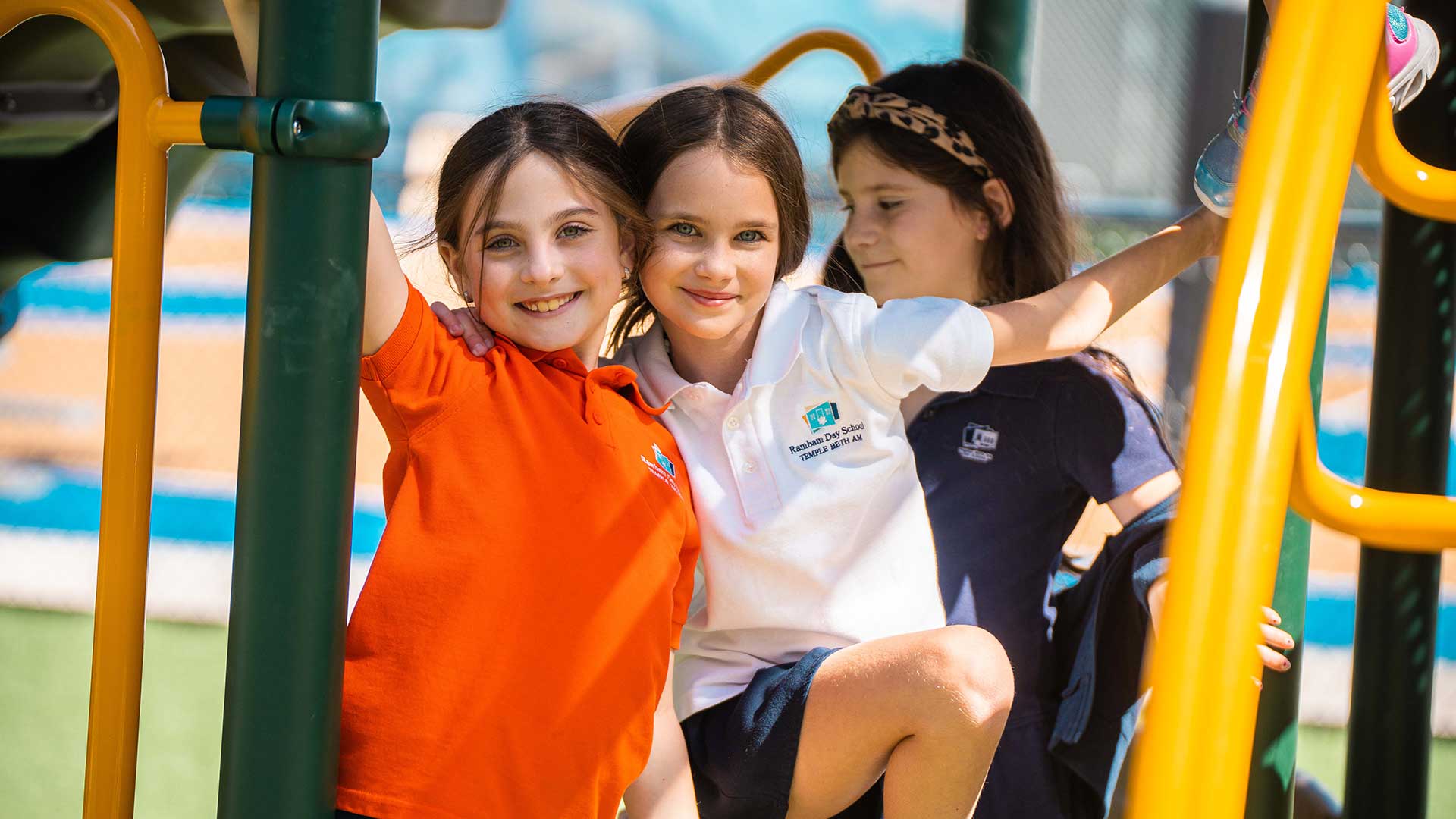
The physical education program emphasizes enjoyable participation in physical activity and helps students develop the knowledge, attitudes, motor skills and self-confidence needed to maintain physically active and healthy lifestyles. It is a comprehensive program from kindergarten through fifth grade based on sound physical education principles, research in motor learning, exercise physiology and teaching methodology that meet the requirements for current P.E. curricula.

Temple Beth Am Day School follows the guidelines of the National Association for Sport and Physical Education whose primary objectives are:

• To foster a love of physical activity and play.
• To develop large and small motor skills.
• To strengthen physical coordination, fitness, grace and control.
• To encourage individual fitness.
• To provide a variety of interactive experiences that facilitate the development of sportsmanship and team cooperation.


   Technology


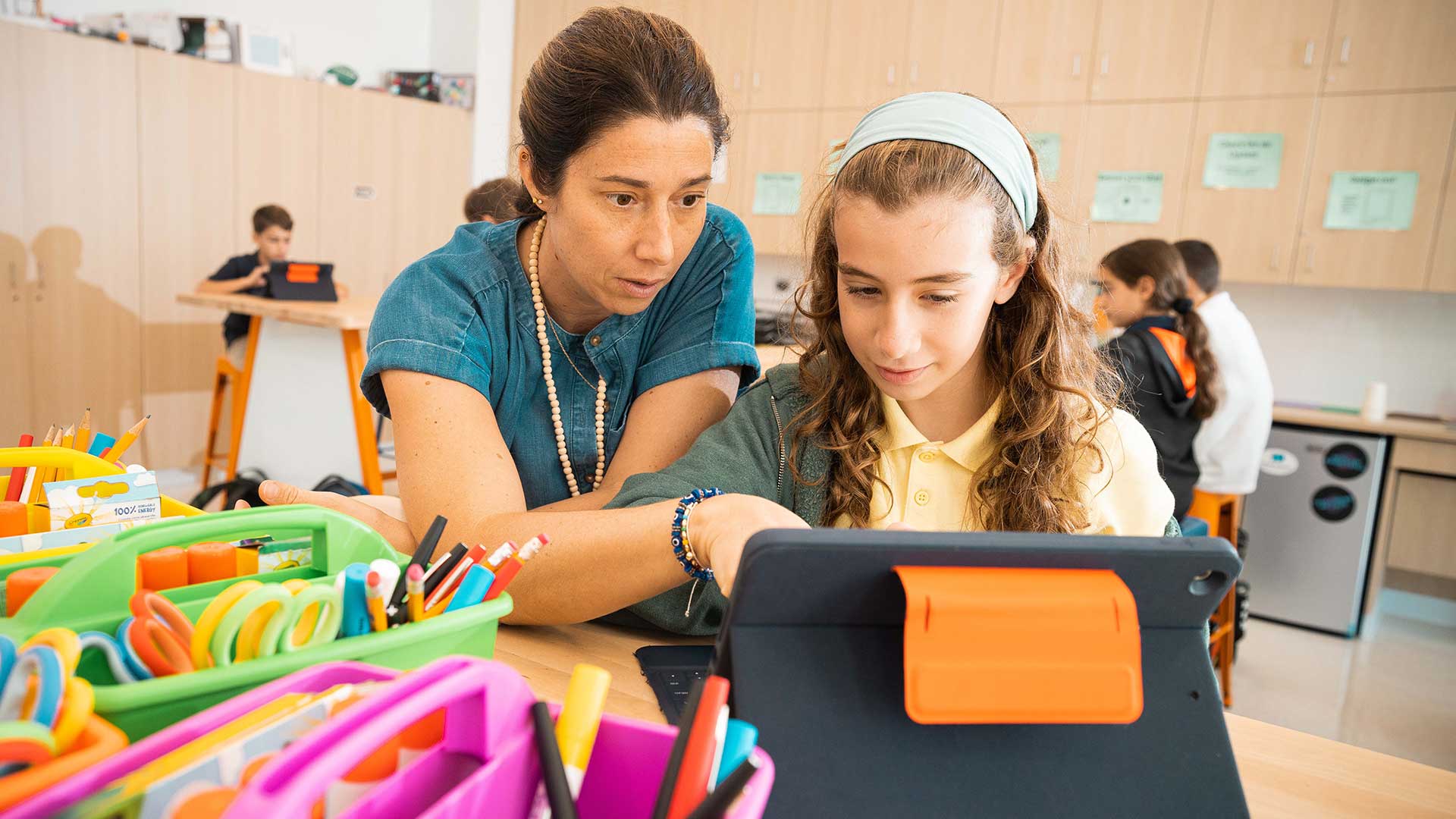
Temple Beth Am Day School offers students many opportunities to employ technology in their learning experiences in an integrated format. First through fifth graders have weekly time in the computer lab as well as use of computers in the classrooms.

Technology provides an important link to content areas. It allows for interactive experiences to be brought into the classroom and adds depth to units of study. The mathematics program includes an array of technology products that promote and enrich learning. A wide variety of software enhances students' science investigations. Students experience visual connections that strengthen their understanding of and engagement in social studies units.

BethAmTV Flickr Facebook URJ JewishMiami
Home | Calendar | Make A Donation | Beth Am News | Memberhood | Español | Photo Gallery | Beth Am TV | Facebook | Contact Us

© 2013 Temple Beth Am, The Richard and Janet Yulman Campus, 5950 N. Kendall Drive, Pinecrest, FL 33156 • 305.667.6667

Search